You have not heard from me for months. There’s a reason for that. A couple of reasons, actually.
I’ve been pastoring. And grandfathering. And marketing that modern cowboy novel—Someplace North, Someplace Wild—that launched this web page.
I believe we’re in the final stretch. Four publishers have requested the entire manuscript. Somebody’s going to say yes.
So stand by for an update in about a month.
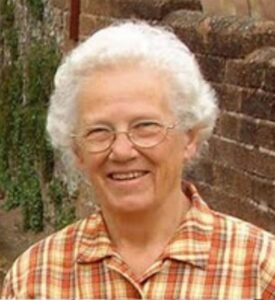
Meantime, this lady and I will celebrate our 50th anniversary June 8! Here’s a picture we took recently on Michigan Avenue in downtown Chicago, at the very spot I sealed our engagement with a diamond ring.
Yes, she has hung in there with me all these years!
This page has laid dormant too long; it’s time to wake a sleeping blog. And a new adventure is the perfect moment to do just that.
Tomorrow I’m scheduled for the first of 38 radiation treatments for prostate cancer left over after I surrendered the gland itself to a surgeon in July 2020.
Two years ago a blood test reported my PSA number at 24, six times greater than the upper limit of 4. As I recall, my wife and I stopped whatever we were doing and looked at each other. For maybe a half hour, a mist of fear washed over me. When I quickly reviewed my PSA history, it showed two years without testing. Now we knew it was aggressively growing during that time. (Brothers, get a PSA reading every year!)
My fear morphed to a few minutes of anger toward my doctor. But the anger dissolved when I remembered my theology: God holds us responsible to care for our bodies, never mind the doctor. A 66-year-old man of average intelligence has no excuse to allow two years to pass without such an important test.
As for the fear, it was soon gone as well. I asked myself, what’s the worst that could happen? An early promotion to glory! My family would miss me, especially my bride, but they would survive and move on. For the time being, death is part of life … but a day is coming!
Besides, as a friend reminded me the other day, if you’re going to have a cancer, the prostate variety is not so bad. My doc estimates an 85 percent probability of disease control for five years at least.
My horse ran away
In these early ruminatings I remembered a story I have retold many times and preached more than once.
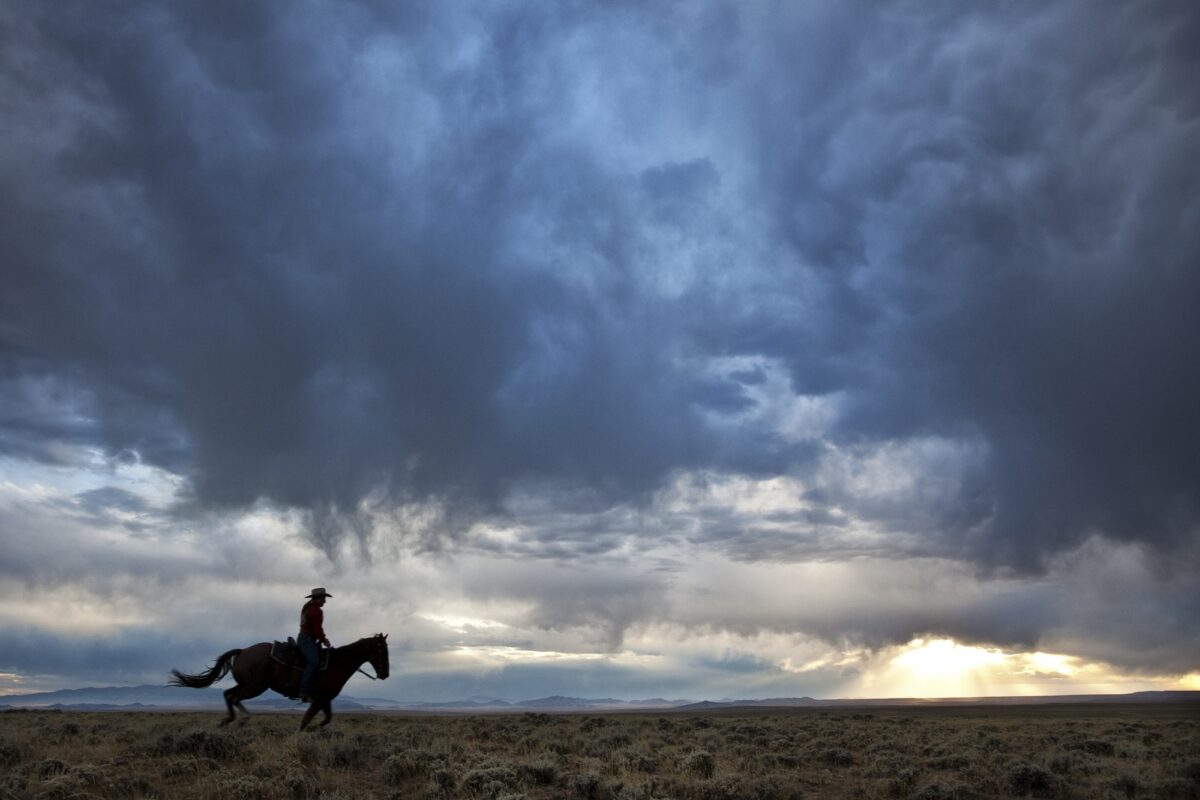
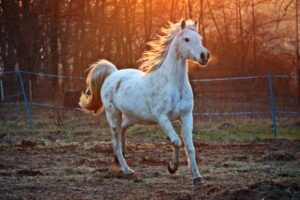
A man in a village had a prized horse. One morning he got up and the horse was gone. Lord, why did you let my horse run away? But a few days later, the horse returned with ten more. Ah, thank you, Lord, now I have eleven horses! The man’s son started breaking the horses to ride when one kicked the son and broke his leg. Oh Lord, why did you let that horse break my son’s leg? Sometime later, a gang of thugs came through the village forcibly taking every able-bodied young man. They grabbed this son, then saw his broken leg and released him. Ah, thank you, Lord, you saved my son!
When we suffer (as I had declared from the pulpit), when we grieve, we need to remember God’s meticulous providence. He brings good from suffering, beauty from ashes, joy from grief.
I peered at the towering PSA result and recalled my repeated retelling of that story. It was as if God were saying to me, You love to preach it, let’s see how well you live it! And that made me laugh at myself. Still does.
Something is lurking
The elevated PSA—the doctor called it aggressive cancer—led to months of tests and scans, virtual meetings with multiple doctors, and a radical prostatectomy 19 months ago. The post-op pathology confirmed what the doc suspected: the cancer had escaped the gland and some unknown amount still lurked, probably in the prostate bed, as he called it.
They injected a hormone to put the cancer to sleep for a few months, and tomorrow I will lay down for about 15 minutes while an invisible, carefully targeted radiation beam attempts to destroy those nasty yet invisible cancer cells. And the same the next day, etc. … five days every week for seven and a half weeks.
Like cancer like Pharaoh
Recently I had a new thought about all this, an intriguing biblical lens through which to view it. It occurred to me, in a season of prayer, that cancer and Pharaoh have some things in common.
The Pharaoh of Exodus was a ruthless, godless king, a cruel tyrant who brought suffering to God’s people. How could such a thing happen? Who made that possible?
God himself, as we see from His own testimony: But for this purpose I have raised you up, to show you my power, so that my name may be proclaimed in all the earth (Exo 9:16 ESV). God established Pharaoh, who brought cruel suffering to God’s people, so that He might receive glory, climaxed in an epic rescue at the Red Sea just as all hope was lost. Thousands of years later millions still marvel at that miracle.
Cancer is like Pharaoh, something God raises up for His own glory, sometimes a cruel tyrant who brings suffering to a Jesus follower. For what purpose? That God might receive glory! That He who is worthy might be honored in the suffering of a faithful servant and, on a day to come, might destroy that enemy, as He did Pharaoh, and liberate His servant with a deliverance far beyond his wildest dreams!
After all, what’s at stake when you have cancer? What if that cancer doesn’t go away? Try this: Your life is not about you, it’s about God. It’s always about God. If the cancer patient is gloriously healed, praises rise to God. If, on the other hand, the cancer lingers, or even progresses to the taking of a life, praises rise to God, especially if that cancer patient is clear about the fundamental view of life: it’s about God and his glory, and He will see to my need in the very best way.
Just asking the loan of your body
Years ago I had the opportunity to meet someone who had learned this at a much deeper level, Dr. Helen Roseveare, a British missionary to Africa.
On the night she prayed to receive Christ, Helen’s pastor said, Maybe one day God will offer you the privilege of sharing in some part of His sufferings. She never forgot that.
Helen went to the Congo, in the heart of Africa, in 1953. In the 60s the Congo went through the violent Simba rebellion. Many foreign missionaries left, but she stayed and paid a terrible price. Helen was the first white woman to be taken captive by the Simbas.
All that you can imagine happened to me, she told me. One example, I lost my back teeth to the boot of a soldier. Throughout all that horrible abuse, she experienced two realities.
On the one hand, the terror and pain were real. But at the same time, she was sustained by a sense of Christ speaking: I want to trust you with this. This is not your suffering; it’s Mine. I just ask the loan of your body for a time.
Cancer is not persecution, but it is a God-ordained suffering which can redound to his glory.
I don’t know that I will experience suffering at a significant level. Neither do you. But if we do, when we do, when anything bad happens, we can respond, in a spirit of expectancy, Oh, Lord, my horse ran away! Now what?
My wife and I recently read Rocket Men: the daring odyssey of Apollo 8 andthe astronauts who made man’s first journey to the moon, by Robert Kurson. (Thanks, Mark Moffat, for the tip!)
Page 282 describes the astronauts, on their way home, crossing the point “at which Earth’s gravity [becomes] dominant.” From there the spaceship gradually accelerated until, days later, entering the earth’s atmosphere, they topped out at 24,500 mph.
“But that was a long way off,” Kurson writes, “and for now, when the crew looked out their windows, with no landmarks in sight, they seemed to be standing still.” That was an illusion. They were not motionless, they were flying at 5,720 mph.
“A good metaphor for life,” my wife said when she came to that page. Sometimes it feels like you’re stuck when you’re actually flying. Maybe you’ve had seasons like that.
Baby bird from America
In 1993, I spent two weeks in Ukraine teaching Cross-Cultural Communication of the Gospel at Donetsk Christian University, invited by Dr. Ray Prigodich, DCU academic dean at the time. It was my first overseas trip—after fifteen years as a missionary long overdue—and full of wonder and worry: the wonder of a foreign culture, the worry of a new assignment. My classroom skills were limited, my experience even less.
Sixty students from various parts of the former Soviet Union studied at DCU, preparing for ministry in some part of the Slavic world. I had spent many hours writing curriculum for ten days of class. My arrival coincided with the Sunday morning service on campus, followed by some time to rest. But Monday morning, and the first class session, was soon upon me. Like a baby robin contemplating gravity from the nest, I stepped off the edge and furiously flapped my lecturer wings, hoping not to crash.
And actually, it wasn’t so bad … at first. Class all morning, and prep in the afternoon. Two competent interpreters swapped off sessions. The students engaged in the class discussions and one-on-one with me during breaks.
As with many test flights, this one started with a lift and gradually glided earthward. By the end of the first week, my pinions hung a little ragged. Felt pretty much grounded. The initial enthusiasm waned, and by the last couple of days I was consoling myself: “You did not meet your expectations, and surely disappointed the students, but you did your best.”
Surprise awaited
With that self solace I came to the last day, determined to stick the thing out with a brave face, finish with what strength I could muster. That afternoon I would fly to Kiev and be driven to Rovno, a city in western Ukraine, to spend the weekend with national church leaders before departing for Oregon and home.
But, on that last day of class, I was in for a surprise.
As I wrapped up a little before noon, a student asked for the floor. Speaking for the group, he said they wanted me to know how much they had appreciated their time with me. They had found encouragement in my smile and friendly manner, learned from the material. Other warm remarks followed, words I have since forgotten.
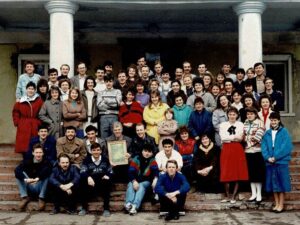
They gifted me with a painting one of the young ladies had completed during those two weeks, a garden scene in oil. On the back, in neat Cyrillic, someone had written, “With fond memories to the dear professor from the students of the Bible College, 3/11/93.” In the group picture I’m holding the painting. “The Garden” hangs in our home, and twenty-seven years later the memory warms me.
I thought about this when my wife recognized the metaphor in the Apollo 8 story, three lunar explorers feeling motionless while traveling seven times the speed of sound. Rocket men, them; me, a little bird. Different leagues, but neither felt movement.
But One is always working
Such has ever been the human story. Abraham waited twenty-five years on God’s promise of offspring with no indication anything was happening.
Joseph thought he was stuck in Pharaoh’s prison but found out otherwise.
And how about Moses’ forty years in the desert, the very definition of high and dry? But God was moving things along at exactly the right speed.
Humans were born to produce, to see progress. That those rocket men could endure hours, maybe days, without any sensation of motion testifies to the stuff of which such voyagers are made. Most of us have far lower thresholds of discipline.
Stuckness … and that’s one way to describe 2020 … wears on the soul. We ache for light, motion, progress, some assurance of the dawn. And our soul’s Mover and Shaker whispers, “Take courage, you are not abandoned.”
“He does not withhold His grace from those who earnestly ask for it,” Brother Lawrence wrote in 1691. “Knock on His door, and keep on knocking and I assure you that if you are not discouraged, He will open it in His own good time and give you all at once what He has withheld for years.”
Last July I wrote about a most remarkable experience in the Seoul, Korea airport. This post relates a different encounter in another airport, Sea-Tac, in Washington state.
In the 90s I traveled between Oregon and Alaska two or three times a year. Almost always I took the (cheaper) late flight from PDX to Anchorage, arriving about 1 a.m. And, on the way home, the red-eye.
One of those 2 a.m. departures from Anchorage found me by the window, and, in the middle seat next to me, a young man, a little rough around the edges. Unwashed, I think. I figured he was a commuting fishermen. Lots of commercial fishers traveled between Alaska and the Pacific NW.
He seemed grumpy (turned out he wasn’t feeling well) and I was tired. I didn’t want to talk. But I felt compelled (later I knew it wasn’t just an intrinsic compulsion; Someone was compelling me) to start a conversation in an effort to share the gospel. I could never have imagined what the Holy Spirit was up to, but I was about to find out.
He freely shared about his life. Yes, he was a fisherman. The only other thing I remember: his uncle was a preacher. That provided a natural segue to my testimony, and the gospel. He listened politely, interacted a little, but wasn’t interested. I tried to be clear that his eternal destiny was at stake, and what it meant to trust Christ. I asked him if he wouldn’t like to do that right there. But he wasn’t ready.
We stopped talking, I turned to the window, went to sleep and didn’t wake until Seattle.
I thought I was going for a walk
The plane was going on to Portland; there was no need to get off. But I wanted to stretch my legs. Again, I could not know I was being nudged by Providence.
At the gate desk I inquired how long before reboarding. “About ten minutes.” I turned to start a brisk walk, but someone was there, waiting for me, the man who’d been in the aisle seat in my row, on the other side of the fisherman. A young guy, maybe 25. He wanted to talk. He seemed agitated. And he surprised me.
“I heard you talking to that man sitting between us and I think you’re a very fortunate guy.” He fidgeted. I wondered if he was going to hit me. I was lucky because the other guy didn’t hit me, but this fellow was going to do it. (You know how your mind can run away in a flash?)
“I’ve never met anyone who was so confident about their relationship with God.” He pulled a scrap of paper from his pocket and pushed it at me. “I heard you tell him you’d send him some information and I was wondering if … maybe … you’d …”
I took the slip. He’d scrawled his name and address.
“Of course I’d be happy to send you the same material.” He nodded. “In fact, we can talk right now. I’ve got time before I have to get back on the plane.”
“Oh no, my life is such a mess.” He looked away, then back. Talked some more. He also was a commercial fisherman, on his way home to North Dakota. He’d recently broken up with his girl, and when he stepped off the plane and saw couples embracing, the pain rushed over him again.
“Why don’t we just sit down and talk for a few minutes? I could pray with you.”
Not just a couple of guys talking
No, he didn’t think so. But he kept talking. Told me about a friend who’d been killed in a car accident. Hurt and grief went deep in him. He figured he’d just go now. He wasn’t worthy to ask anything from God.
Once more, I invited him. “Why don’t we just sit down over here and talk about it? You can respond to God right now.”
No, he guessed not. And I almost gave up. No point in being obnoxious. Just as well start that walk.
Then it hit me. I realized what was happening. This wasn’t just a human encounter, a couple of weary travelers chatting at six in the morning in a busy airport. For just a moment, time had stopped. Heaven and hell were in attendance, one beckoning, one grasping. This young man in front of me was standing at Jesus’ door, and about to turn away. This was his moment. Jesus was calling, and the devil was lying.
“You know, there’s a battle going on right now.”
“Yeah, I know. I’ve really messed up.”
“No, I don’t think you understand. Someone is whispering in your ear right now, ‘Get away from this guy. Don’t listen to him. Get out of here.’ And you could do that. You could end this conversation and walk away. But you might never be in this place in your life again. God is calling to you. Are you sure you won’t step over here with me and look at the Bible and pray?”
“Okay.”
What I almost missed out on
We found a spot about as quiet as you could expect and read some Bible verses. Why we need a savior, and who he is, and how do we come into relationship with him. We are great sinners, but Christ is a great Savior. He could never be good enough to please God, but Jesus’ perfect goodness had been offered to God on his behalf.
And there, at 6:00 a.m. in the Seattle airport, a fisherman bowed and repented and trusted in the promise of Christ. He prayed. Right there at a SeaTac gate, people coming and going, he found faith in Jesus. He’d almost walked away, but he stayed and was born again by the Spirit of God.
I got home and mailed the material, and included the name of a church or two in his town. Never heard back. Reckon I’ll see him at Jesus’ feet someday.
He almost missed his moment, and so did I. When I had boarded in Alaska, I didn’t feel like talking to anyone. I just wanted to sleep. But something—Someone, actually—constrained me to speak to my neighbor. I did, he heard, said No. Which didn’t surprise me. That was normal.
But the message wasn’t meant for him. The fisherman in the middle was tuned out, but the fisherman on the aisle was listening. I didn’t know that, might have wondered, after that “fruitless” conversation, What was that all about, Lord? I could not have known for whom the words were spoken.
And while I slept, an eavesdropping passenger pondered and processed. And got off the plane, and waited, just in case I showed up.
It’s a great example of the difference between the gospel call and the effectual call. But that’s for another post.
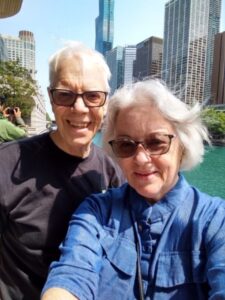 Meantime, this lady and I will celebrate our 50th anniversary June 8! Here’s a picture we took recently on Michigan Avenue in downtown Chicago, at the very spot I sealed our engagement with a diamond ring.
 of fear washed over me. When I quickly reviewed my PSA history, it showed two years without testing. Now we knew it was aggressively growing during that time. (Brothers, get a PSA reading every year!)
 A man in a village had a prized horse. One morning he got up and the horse was gone. Lord, why did you let my horse run away? But a few days later, the horse returned with ten more. Ah, thank you, Lord, now I have eleven horses! The man’s son started breaking the horses to ride when one kicked the son and broke his leg. Oh Lord, why did you let that horse break my son’s leg? Sometime later, a gang of thugs came through the village forcibly taking every able-bodied young man. They grabbed this son, then saw his broken leg and released him. Ah, thank you, Lord, you saved my son!
 brought suffering to God’s people. How could such a thing happen? Who made that possible?
 On the night she prayed to receive Christ, Helen’s pastor said, Maybe one day God will offer you the privilege of sharing in some part of His sufferings. She never forgot that.
 the astronauts who made man’s first journey to the moon, by Robert Kurson. (Thanks, Mark Moffat, for the tip!)
 or ministry in some part of the Slavic world. I had spent many hours writing curriculum for ten days of class. My arrival coincided with the Sunday morning service on campus, followed by some time to rest. But Monday morning, and the first class session, was soon upon me. Like a baby robin contemplating gravity from the nest, I stepped off the edge and furiously flapped my lecturer wings, hoping not to crash.
 during those two weeks, a garden scene in oil. On the back, in neat Cyrillic, someone had written, “With fond memories to the dear professor from the students of the Bible College, 3/11/93.” In the group picture I’m holding the painting. “The Garden” hangs in our home, and twenty-seven years later the memory warms me.
 to stretch my legs. Again, I could not know I was being nudged by Providence.
 travelers chatting at six in the morning in a busy airport. For just a moment, time had stopped. Heaven and hell were in attendance, one beckoning, one grasping. This young man in front of me was standing at Jesus’ door, and about to turn away. This was his moment. Jesus was calling, and the devil was lying.
 in his town. Never heard back. Reckon I’ll see him at Jesus’ feet someday.