Now that you’ve read one or both of my Mountain Ranch Adventure series you can do me a great kindness by posting a review at Amazon (and Goodreads, too).
Reviews make a real difference
If you’re like me, when shopping online you look for the items with lots of reviews, right? Everyone does the same.
Since I’m trying to build a book business (having recently retired from pastoral ministry), building my review list is a big deal.
It’s a quick, easy, free way to help a starting author. You don’t have to write a magnum opus. A single sentence of genuine praise would help lift my profile from the murk of new titles.
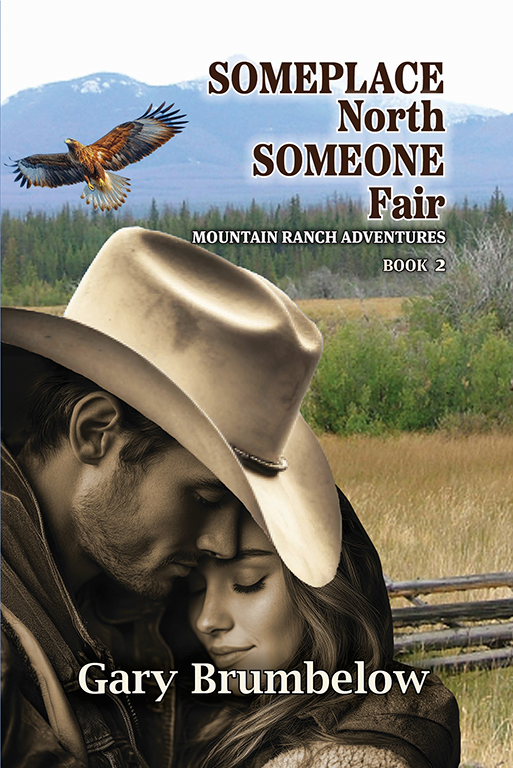
Persuaded? Just click the appropriate image below and you’ll come immediately to the place where you can write and post.
Book 1 was released in August 2024 but when I republished it I lost the 50 original reviews due to Amazon’s policies.
Thanks in advance, and we’ll see you down the trail.
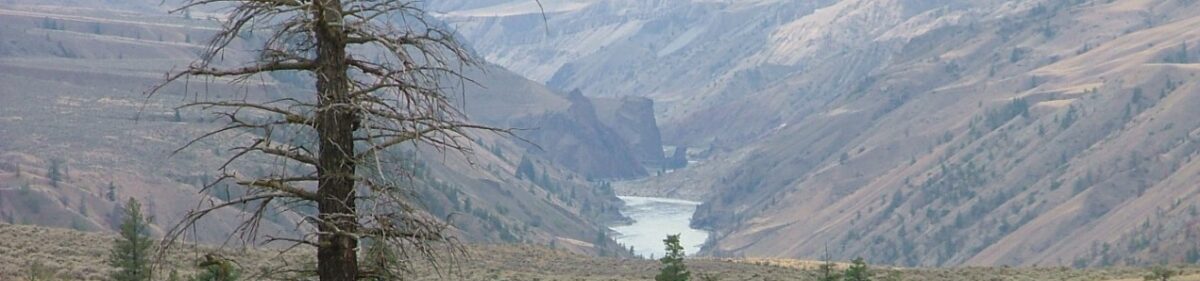
By now, most folks are aware of the Chilcotin River flood, in the interior of British Columbia.
A landslide dammed the Chilcotin River. The water finally surged over the dam and headed downstream where the Chilcotin flows into the mighty Fraser River.
The flood is expected to reach Hope, where the Fraser takes a hard right and heads for the Pacific, on Wednesday.
In the late 70s we lived four miles from the convergence of the Chilcotin and Fraser rivers. In Someplace North, Someplace Wild a young Texan named Cody Brandon will have his life changed in that same neck of the woods.
The Chilcotin is huge ranching country, including the Empire Valley Ranch, owned and operated in the 70s by a Christian couple who quickly became lifelong friends.
The Chilcotin is a huge area of mountains, vast ranches, and forests. My first novel, Someplace North, Someplace Wild, encompasses the Fraser a few miles below the Chilcotin, where the August 2024 flood took place.
The story begins when Cody Brandon, the protagonist, leaves the Texas panhandle to seek his fortune in a remote mountain ranching area. Disaster meets him almost as soon as he enters Canada, and he is led finally to the Grand Valley Ranch (aka Empire Valley), west of the Fraser River.
He meets a beautiful school teacher, lands a dream job, and sits on top of his world, climaxing with a ten-day ride into the mountains to recover lost horses (where he also encounters a grizzly up close).
But on his return from that ride he hears some very bad news that will change his life.
What’s the point of the novel?
The story could be considered a book-length commentary on Mark 4:26-29. Jesus tells a short parable about a farmer who plants seeds and harvests the crop but in between the seed somehow grows without any effort from him. “The kingdom of heaven is like …” Jesus says, and then tells that story.
I summarize that parable as “The kingdom grows as God and man work together.”
Likely, you already marked this on your calendar. But just in case, I thought you might appreciate a reminder. 😎
An event labelled Day of the Cowboy might evoke images of John Wayne or Clint Eastwood.
For me, it’s the perfect opportunity to make a big announcement: I recently signed with Elk Lake Publishing to produce my novel, Someplace North, Someplace Wild!
That’s the fruit of a six-year project, and a big answer to prayer.
Someplace North, Someplace Wild is a contemporary western romantic suspense novel. The story reflects some of my own experiences, including two years of missionary service in a district of huge ranches in British Columbia.
What if a young cowboy—resourceful, honest but impulsive—left Texas for Canada to pursue his dream of punching cattle in the wild, got a job on a remote mountain ranch, met a beautiful girl, all while overcoming impossible odds … then out of the blue got arrested and deported because he’d been framed for murder?
And not only framed, the county attorney is crooked and he can’t trust the system.
What would he do?
That’s the premise for Someplace North, Someplace Wild.
Elk Lake is a traditional publishing house with a goal “to point people to Jesus Christ.” In my experience, that’s a rare clarity of mission in the world of fiction publishing. When I read that I was immediately interested in working with them.
I submitted the first three chapters of my book almost a year ago. That launched a back-and-forth process which culminated when I signed their contract offer July 3.
The writing’s done, the publishing begins
Here’s what will need to happen for the manuscript to become an actual, physical book.
Several months of working with an editor to agree on needed improvements.
Up to sixty days for the publisher to review and suggest further changes.
Securing endorsements, writing acknowledgements, designing the back cover copy, etc.
All the technical aspects: proofing, layout, final corrections, creating the audio book version and printing.
Best case scenario, it could be ready by February 2024; worst case, June. Which is about a year shorter than most of the publishing houses I have talked to.
That seems like a long wait, but it gives me time to get ready for the launch. You’ll hear more about that in the coming months.
As for how to celebrate the National Day of the Cowboy, the organizers suggest attending a rodeo or studying cowboy culture at a museum.
Here are two further ideas from your humble correspondent. 😊
First, go to garybrumbelow.com, enter your email and click Subscribe.
Three promises: 1) I won’t share your email address with anyone. 2) I won’t flood your inbox. I expect to post once every 6-8 weeks. 3) You can unsubscribe anytime.
When you click subscribe you’ll receive a “Confirm your subscription” email in your inbox (if you don’t see it there, check your spam folder). As soon as you confirm, you’ll receive a free short story, “Death of a Steer.” It’s a yarn about something that happens to Cody Brandon, the protagonist of Someplace North, Someplace Wild, eight years before the novel begins.
(If you’re already a subscriber just enter your email and click as if you were not. Nothing will change in your subscription.)
Second, if you like the story, share it with your friends!
This page has laid dormant too long; it’s time to wake a sleeping blog. And a new adventure is the perfect moment to do just that.
Tomorrow I’m scheduled for the first of 38 radiation treatments for prostate cancer left over after I surrendered the gland itself to a surgeon in July 2020.
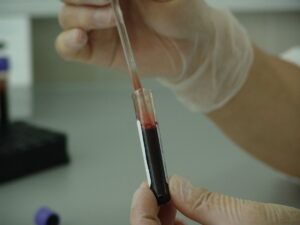
Two years ago a blood test reported my PSA number at 24, six times greater than the upper limit of 4. As I recall, my wife and I stopped whatever we were doing and looked at each other. For maybe a half hour, a mist of fear washed over me. When I quickly reviewed my PSA history, it showed two years without testing. Now we knew it was aggressively growing during that time. (Brothers, get a PSA reading every year!)
My fear morphed to a few minutes of anger toward my doctor. But the anger dissolved when I remembered my theology: God holds us responsible to care for our bodies, never mind the doctor. A 66-year-old man of average intelligence has no excuse to allow two years to pass without such an important test.
As for the fear, it was soon gone as well. I asked myself, what’s the worst that could happen? An early promotion to glory! My family would miss me, especially my bride, but they would survive and move on. For the time being, death is part of life … but a day is coming!
Besides, as a friend reminded me the other day, if you’re going to have a cancer, the prostate variety is not so bad. My doc estimates an 85 percent probability of disease control for five years at least.
My horse ran away
In these early ruminatings I remembered a story I have retold many times and preached more than once.
A man in a village had a prized horse. One morning he got up and the horse was gone. Lord, why did you let my horse run away? But a few days later, the horse returned with ten more. Ah, thank you, Lord, now I have eleven horses! The man’s son started breaking the horses to ride when one kicked the son and broke his leg. Oh Lord, why did you let that horse break my son’s leg? Sometime later, a gang of thugs came through the village forcibly taking every able-bodied young man. They grabbed this son, then saw his broken leg and released him. Ah, thank you, Lord, you saved my son!
When we suffer (as I had declared from the pulpit), when we grieve, we need to remember God’s meticulous providence. He brings good from suffering, beauty from ashes, joy from grief.
I peered at the towering PSA result and recalled my repeated retelling of that story. It was as if God were saying to me, You love to preach it, let’s see how well you live it! And that made me laugh at myself. Still does.
Something is lurking
The elevated PSA—the doctor called it aggressive cancer—led to months of tests and scans, virtual meetings with multiple doctors, and a radical prostatectomy 19 months ago. The post-op pathology confirmed what the doc suspected: the cancer had escaped the gland and some unknown amount still lurked, probably in the prostate bed, as he called it.
They injected a hormone to put the cancer to sleep for a few months, and tomorrow I will lay down for about 15 minutes while an invisible, carefully targeted radiation beam attempts to destroy those nasty yet invisible cancer cells. And the same the next day, etc. … five days every week for seven and a half weeks.
Like cancer like Pharaoh
Recently I had a new thought about all this, an intriguing biblical lens through which to view it. It occurred to me, in a season of prayer, that cancer and Pharaoh have some things in common.
The Pharaoh of Exodus was a ruthless, godless king, a cruel tyrant who brought suffering to God’s people. How could such a thing happen? Who made that possible?
God himself, as we see from His own testimony: But for this purpose I have raised you up, to show you my power, so that my name may be proclaimed in all the earth (Exo 9:16 ESV). God established Pharaoh, who brought cruel suffering to God’s people, so that He might receive glory, climaxed in an epic rescue at the Red Sea just as all hope was lost. Thousands of years later millions still marvel at that miracle.
Cancer is like Pharaoh, something God raises up for His own glory, sometimes a cruel tyrant who brings suffering to a Jesus follower. For what purpose? That God might receive glory! That He who is worthy might be honored in the suffering of a faithful servant and, on a day to come, might destroy that enemy, as He did Pharaoh, and liberate His servant with a deliverance far beyond his wildest dreams!
After all, what’s at stake when you have cancer? What if that cancer doesn’t go away? Try this: Your life is not about you, it’s about God. It’s always about God. If the cancer patient is gloriously healed, praises rise to God. If, on the other hand, the cancer lingers, or even progresses to the taking of a life, praises rise to God, especially if that cancer patient is clear about the fundamental view of life: it’s about God and his glory, and He will see to my need in the very best way.
Just asking the loan of your body
Years ago I had the opportunity to meet someone who had learned this at a much deeper level, Dr. Helen Roseveare, a British missionary to Africa.
On the night she prayed to receive Christ, Helen’s pastor said, Maybe one day God will offer you the privilege of sharing in some part of His sufferings. She never forgot that.
Helen went to the Congo, in the heart of Africa, in 1953. In the 60s the Congo went through the violent Simba rebellion. Many foreign missionaries left, but she stayed and paid a terrible price. Helen was the first white woman to be taken captive by the Simbas.
All that you can imagine happened to me, she told me. One example, I lost my back teeth to the boot of a soldier. Throughout all that horrible abuse, she experienced two realities.
On the one hand, the terror and pain were real. But at the same time, she was sustained by a sense of Christ speaking: I want to trust you with this. This is not your suffering; it’s Mine. I just ask the loan of your body for a time.
Cancer is not persecution, but it is a God-ordained suffering which can redound to his glory.
I don’t know that I will experience suffering at a significant level. Neither do you. But if we do, when we do, when anything bad happens, we can respond, in a spirit of expectancy, Oh, Lord, my horse ran away! Now what?


 The story begins when Cody Brandon, the protagonist, leaves the Texas panhandle to seek his fortune in a remote mountain ranching area. Disaster meets him almost as soon as he enters Canada, and he is led finally to the Grand Valley Ranch (aka Empire Valley), west of the Fraser River.

 of fear washed over me. When I quickly reviewed my PSA history, it showed two years without testing. Now we knew it was aggressively growing during that time. (Brothers, get a PSA reading every year!)
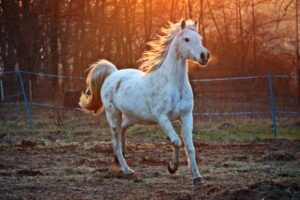 A man in a village had a prized horse. One morning he got up and the horse was gone. Lord, why did you let my horse run away? But a few days later, the horse returned with ten more. Ah, thank you, Lord, now I have eleven horses! The man’s son started breaking the horses to ride when one kicked the son and broke his leg. Oh Lord, why did you let that horse break my son’s leg? Sometime later, a gang of thugs came through the village forcibly taking every able-bodied young man. They grabbed this son, then saw his broken leg and released him. Ah, thank you, Lord, you saved my son!
 brought suffering to God’s people. How could such a thing happen? Who made that possible?
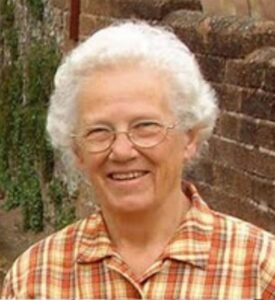 On the night she prayed to receive Christ, Helen’s pastor said, Maybe one day God will offer you the privilege of sharing in some part of His sufferings. She never forgot that.